
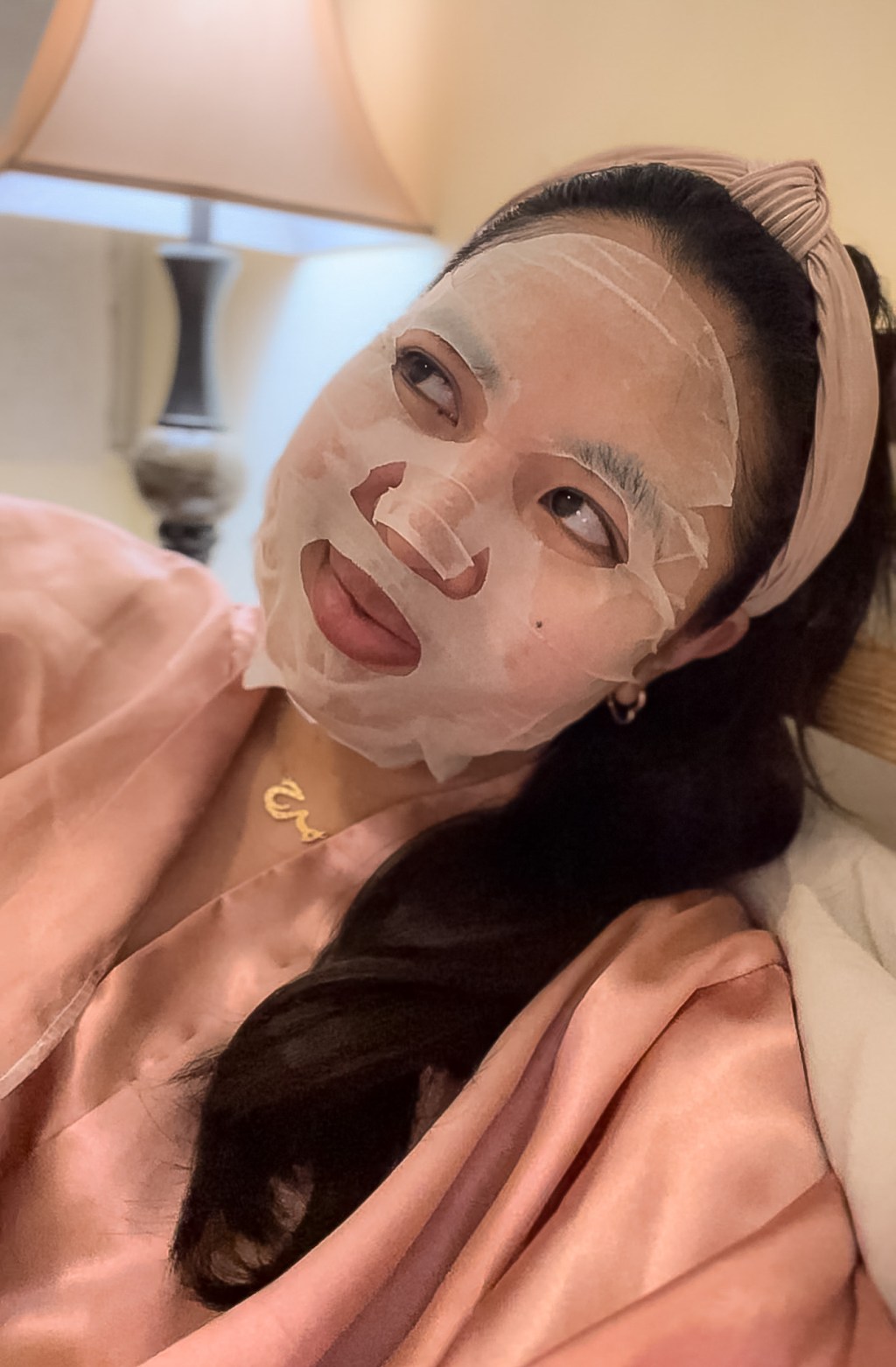
I have been in countless skin consultations and I love how an individual finally wanting to take a step in improving their skin health. As much as I get excited of educating them about their skin needs, oftentimes those consultations are filled with tears. There were difficult conversations instead of just skincare recommendations. There are a lot of instances I knew that I was not just dealing with a patient who has acne, wrinkles or rosacea. But, an individual who does not feel comfortable about her or himself. I dealt with individuals who struggled with melasma or sudden inflammatory skin disorders that appeared after going through a lot in life.
Indeed, there is a relative connection between stress and the skin (Borzyszkowska et al., 2022). Whether I will be assisting doctors or taking patients for treatments, most of them would say how they have been stressed or went through a rough patch that significantly affected their skin health. Although there are limited studies and research about the link between mental health and its impact on the skin, there is an apparent physiological link between our skin health and our overall well-being that we can’t ignored.
When we are feeling stress, we release stress hormones that trigger different body responses to adapt to the stress. In particular, excessive growth hormones, an increase in cortisol levels, and hormones such as Prolactin and Androgen significantly increase the sebum production that causes acne (Halvorsen et al., 2009). Many people would quickly take the antibiotics path to treat acne, without considering of what’s truly going on. Another profound change in the skin is the massive water loss and increased redness (Taylor, 2019). With these changes, your skin loses its moisture, and affects your skin elasticity. In which, premature aging signs can be more apparent.
Negative emotions can significantly decrease the immune system which affects the skin’s ability to heal or recover. Also, there is a risk of developing or flare-up inflammatory skin diseases. One particular example is, a client that has rosacea and looks like its getting worst. She was clueless of what’s going on her skin and started to loss confidence and self esteem. After my assessment, I found out how she went through a lot of stress and sleepless nights that made it trigger – in which, almost impossible to calm her skin down.
Whilst many of us love the overwhelming ten-step skincare as a somewhat therapeutic and stress reliever, it is vital to be intentional about what’s going on deep inside our skin. To take time to reflect on what you truly feel about yourself is worth more than any skincare products. This concludes that skincare is more of a holistic approach than just our weekend ‘self-care’ practice. It’s more than looking good and glowing. Learning stress management and being mindful is one of the many things we can do, to fully improve our overall health.
Furthermore, the best way to address your overall well-being is to seek professional advice both for our mental and skin health. To be truly invested in your self is to be intentional and mindful. As a nurse, I learned to treat my clients holistically. I would assess them further and often, I’ll ask questions about their habits and lifestyle to figure out the root cause/s of their skin issues. Because self-care shouldn’t be just limited by the serums and aesthetic procedures that can make your look aesthetically good. Because skin health is to feel good about yourself.
XOXO,
Marah
References:
Halvorsen, J.A., Dalgard, F., Thoresen, M. et al. Is the association between acne and mental distress influenced by diet? Results from a cross-sectional population study among 3775 late adolescents in Oslo, Norway. BMC Public Health 9, 340 (2009). https://doi.org/10.1186/1471-2458-9-340
Helen Taylor, PhD. (2019). Practical Dermatology. Perspective: Meantal Health is Skin Health. Available at: https://practicaldermatology.com/articles/2019-feb/perspective-mental-health-is-skin-health/pdf (Accessed: March 25, 2024)
Borzyszkowska D, Niedzielska M, Kozłowski M, Brodowska A, Przepiera A, Malczyk-Matysiak K, Cymbaluk-Płoska A, Sowińska-Przepiera E. Evaluation of Hormonal Factors in Acne Vulgaris and the Course of Acne Vulgaris Treatment with Contraceptive-Based Therapies in Young Adult Women. Cells. 2022 Dec 16;11(24):4078. doi: 10.3390/cells11244078. PMID: 36552842; PMCID: PMC9777314.
 Marah Shamir
Leave a comment